
Frontline Responder Program
A Different Approach to De-Escalation, Retention, and Workforce Stability
Hi, I'm Trudy McCloud
You might be here because…
- You’re tired of investing in training that sounds good in theory but disappears the moment emotions run high and you’re watching capable, committed staff leave because the work has become unsustainable.
- You’re not frustrated with your people; you’re frustrated with systems that expect human beings to absorb constant pressure, conflict, and distress without teaching them how to regulate it.
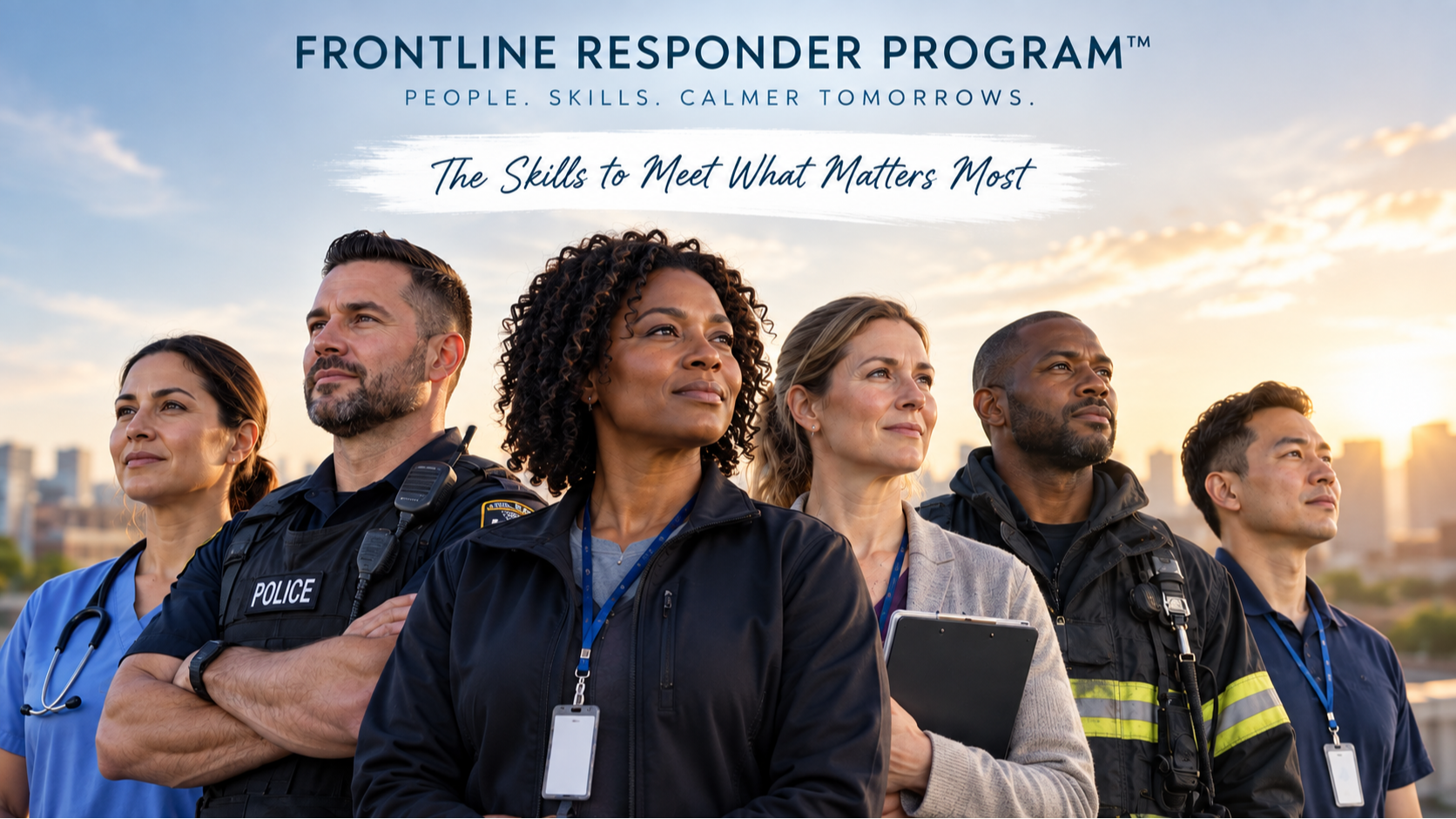
That’s exactly why the Frontline Responder Program exists, to build real capacity in people-facing teams, so regulation, de-escalation, and recovery show up when pressure is highest, not just when it’s easy.
If this is resonating, the next step is simply a conversation.
If you’re reading this and thinking, “This is exactly what we’re dealing with,” you don’t need to have all the answers or know exactly what your organization needs.
The next step is a brief conversation about what your teams are experiencing, where the greatest pressures are showing up, and whether the Frontline Responder Program could help build the capacity to meet them.
In this 15-minute introduction call, we will:
- Talk about the challenges your people and leaders are facing
- Identify where emotional intensity, escalation, burnout, or turnover may be affecting your workforce
- Explore the skills and capacity your teams may need to respond more effectively
- Discuss how the Frontline Responder Program could fit your organization
- Determine whether it makes sense to continue the conversation
No pressure. No commitment.
This is simply an opportunity to talk about what is happening in your organization, ask questions, and determine whether the Frontline Responder Program is the right fit for your team.
Let’s start the conversation.

BUILT FROM DIRECT EXPERIENCE
Trudy McCloud brings decades of experience working within emotionally demanding systems, not simply as an observer, but as a practitioner, leader, educator, and program developer.
Her experience spans behavioral health, healthcare, education, human services, military-connected communities, and other people-facing environments where emotional intensity, crisis, burnout, and difficult interactions are part of the daily reality.
That experience is the foundation of the Frontline Responder Program, translating evidence-informed concepts and real-world lessons into practical tools people can use in the moments that matter most.
More About The Program